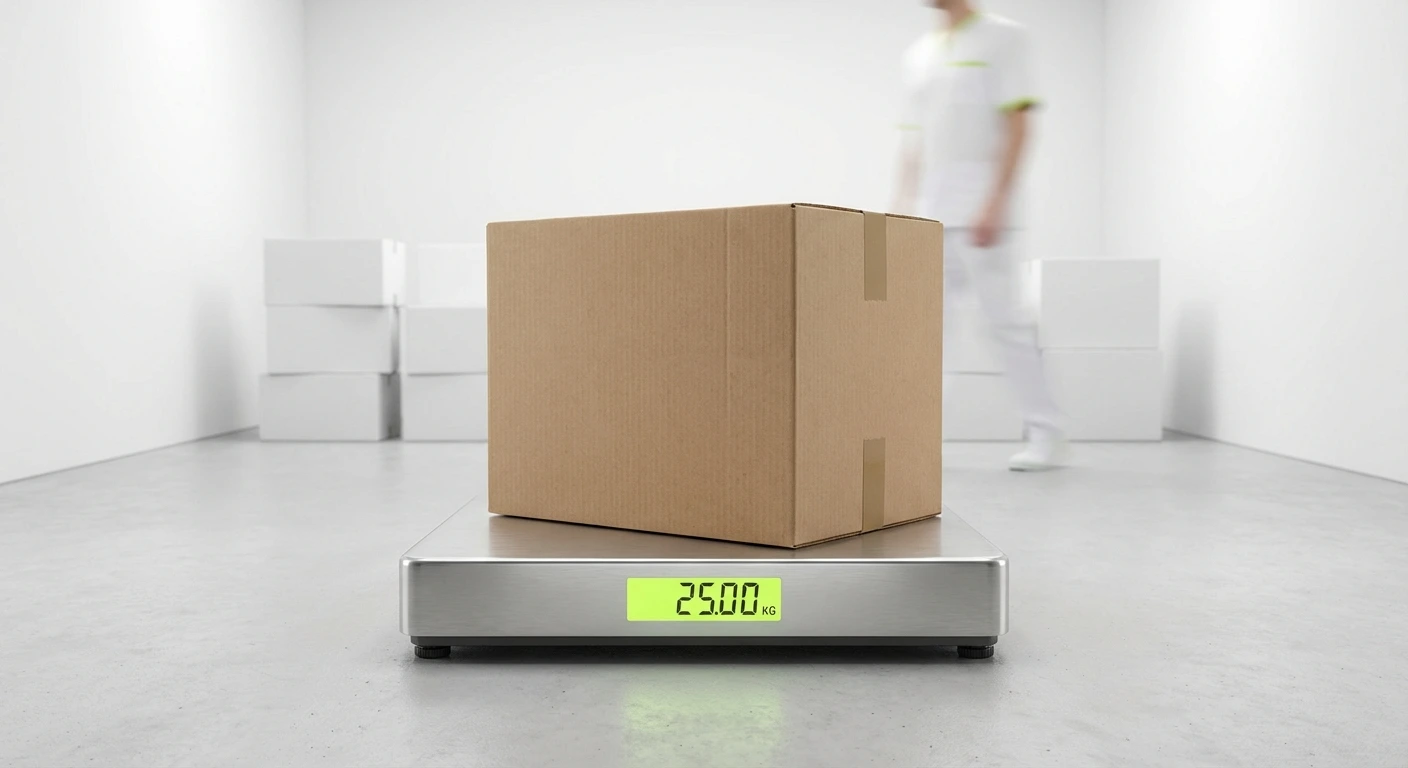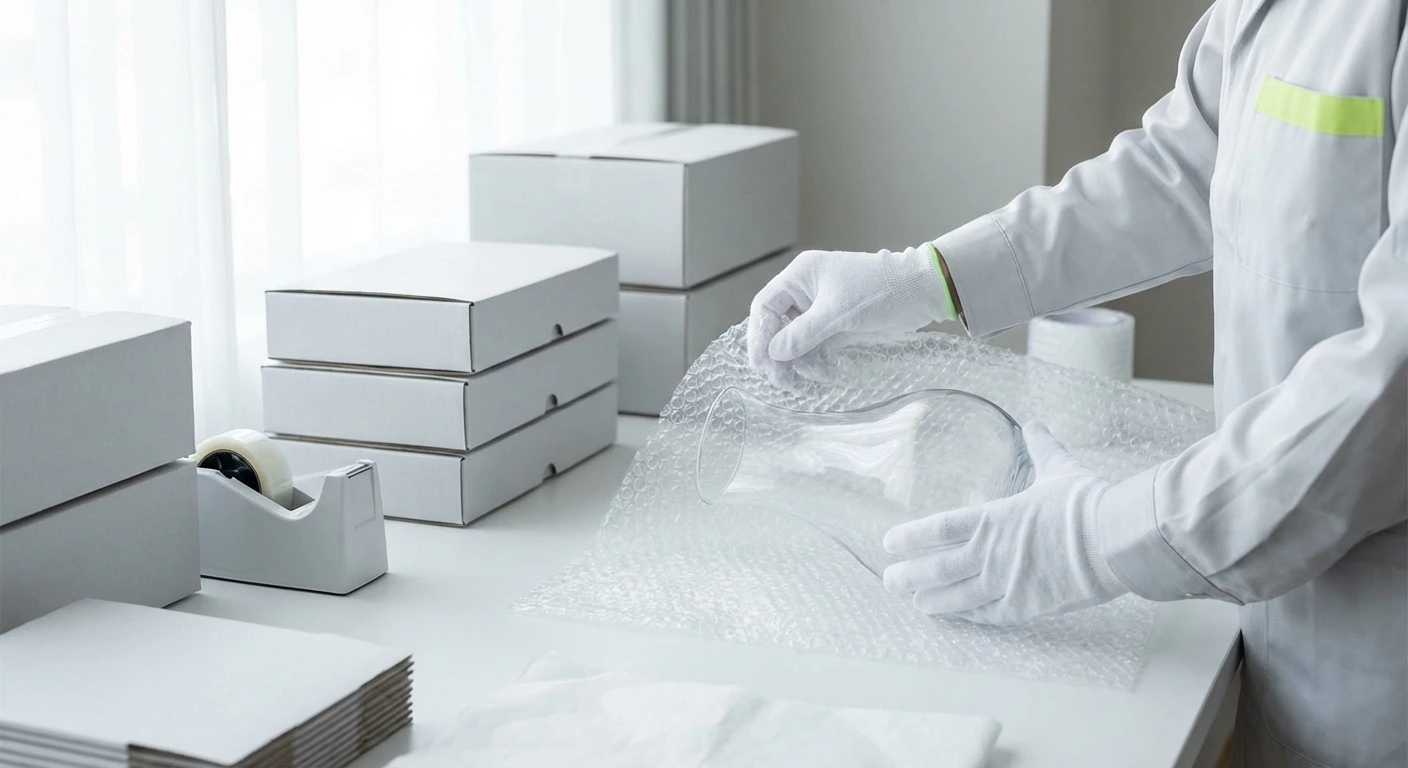
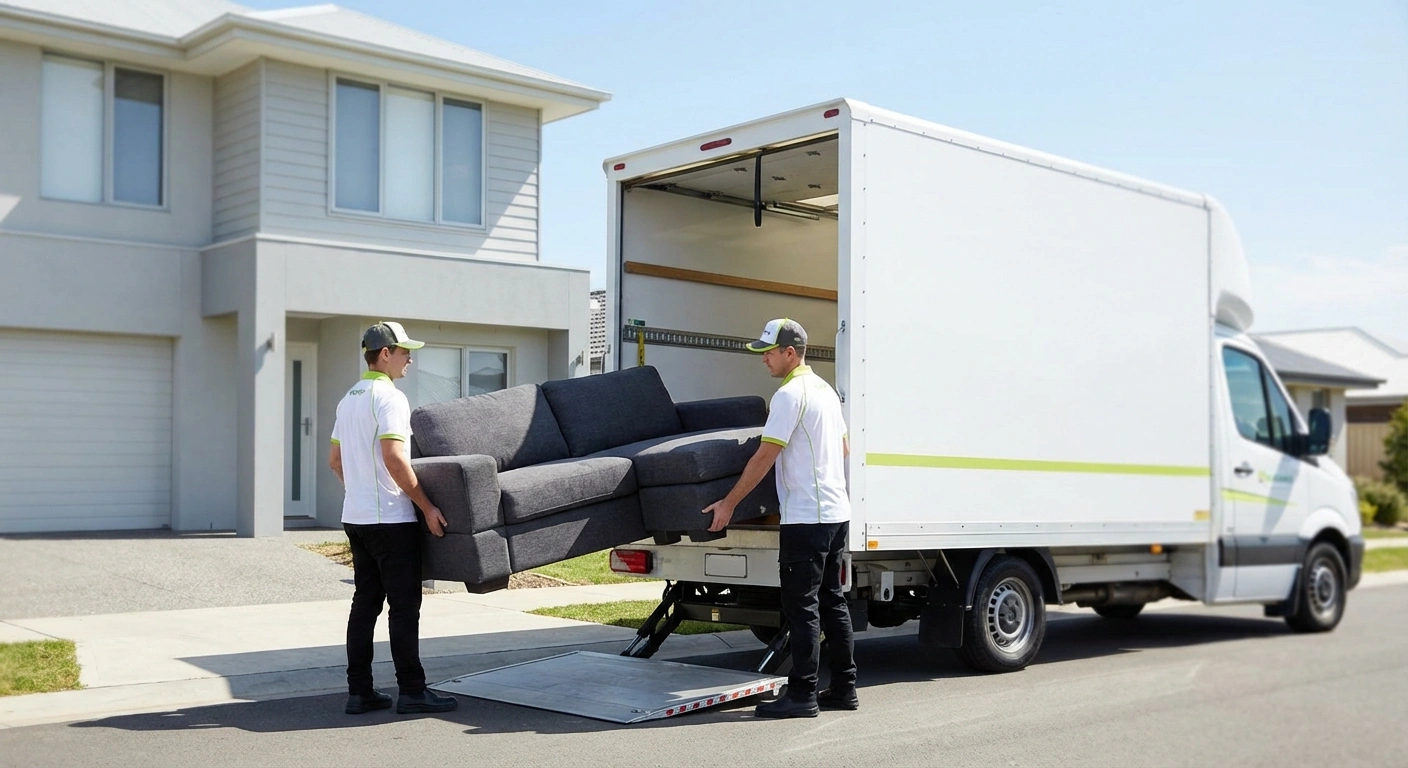

Sending fragile items through a courier can be nerve-wracking. Glass, ceramics, electronics, antiques - there's always that worry about what happens inside the sorting facility. Here's what actually works to protect your delicate items.
The Truth About "Fragile" Stickers
Let's be honest: fragile stickers don't really work with standard couriers.
Standard carriers handle thousands of parcels daily through automated sorting systems. Your box gets thrown, dropped, and stacked by machines that can't read or respond to labels. That "FRAGILE - HANDLE WITH CARE" sticker is essentially invisible to the conveyor belts and sorting chutes.
Reality Check
"Don't rely on fragile labels - it's an automated sorting process. If it's valuable, consider a man and van, proper courier delivery, or try and get someone on a back load." - Industry advice from forums
This doesn't mean you can't send fragile items - it means you need to rely on proper packaging and the right service choice, not stickers.
Courier Comparison for Fragile Items
| Courier | Fragile Handling | Insurance | Notes |
|---|---|---|---|
| DPD | Good | Up to £5,000 | One-hour delivery windows reduce handling |
| DHL | Good | Varies by service | Express services have less hub handling |
| UPS | Moderate | Up to £50 standard | Access Points reduce final-mile issues |
| Royal Mail | Moderate | Up to £500 (Special Delivery) | Follow their packaging guide exactly |
| Evri | Poor | Limited | Not recommended for fragile items |
| Yodel | Poor | Limited | Not recommended for fragile items |
Packaging Fragile Items Properly
Since you can't control how couriers handle your parcel, packaging is your only real protection:
The Double-Box Method
- Wrap the item - 2-3 layers of bubble wrap minimum, taped securely
- Place in inner box - Should fit snugly with padding on all sides
- Fill ALL gaps - Packing peanuts, crumpled paper, or foam
- Place inner box in outer box - Leave 5cm+ gap on all sides
- Fill outer gaps - More padding around the inner box
- Seal thoroughly - Quality packing tape on all seams
The Shake Test
Pick up your sealed box and shake it. If you hear or feel the item moving inside, add more padding. Your item should be completely immobile within the packaging.
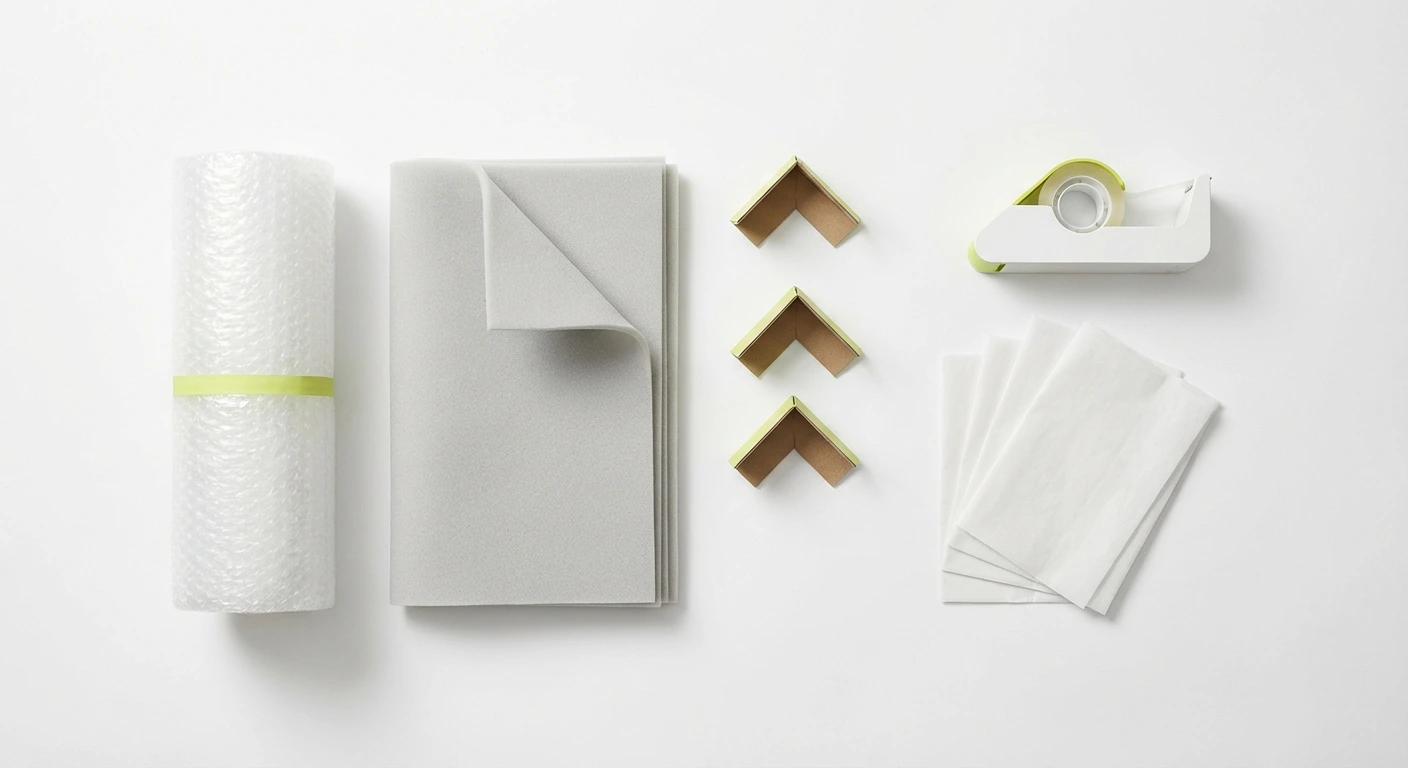
Materials You'll Need
- Bubble wrap - Small bubbles for delicate items, large for cushioning
- Packing peanuts or paper - Fill every gap
- Sturdy boxes - New if possible, no damage or crushing
- Strong packing tape - Not sellotape
- Corner protectors - For framed items, mirrors, TVs
Insurance & Making Claims
Here's the catch many people don't realise until it's too late:
Many Couriers Exclude Fragile Items from Compensation
Glass, ceramics, artwork, mirrors, and other "classic breakables" are often excluded from standard insurance, even if the courier accepts the parcel. Check the terms BEFORE booking.
What's Usually Covered
- Loss of parcel (if tracking shows it)
- Damage to non-excluded items with proof
- Delays (sometimes, with special services)
What's Usually NOT Covered
- Glass, ceramics, china (even when properly packed)
- Artwork and antiques (need specialist insurance)
- Items inadequately packaged
- Sentimental value - only replacement cost
Tips for Successful Claims
- Photograph before packing - Shows condition before transit
- Keep all packaging - They may want to inspect it
- Report damage immediately - Within 24-48 hours
- Have proof of value - Receipt, valuation, or similar listing
Specialist Fragile Item Services
For truly valuable or irreplaceable items, consider specialist services:
Pack & Send
Specialist service that packs and ships fragile items. They can custom-crate artwork, antiques, and delicate goods. Includes proper insurance for fragile items.
Specialist Art Couriers
For artwork, antiques, and high-value pieces, specialist art handlers use climate-controlled vehicles, custom crating, and white-glove handling.
Man and Van Services
For large fragile items (TVs, mirrors, glass furniture), a man and van service avoids all the problems of automated sorting. Your item travels point-to-point with personal handling. This is often the safest option for:
- Large mirrors and glass furniture
- TVs and monitors
- Antique furniture
- Musical instruments
- Valuable electronics

What Can (and Can't) Be Sent
Usually OK to Send
- Electronics (properly packaged)
- Books and documents
- Clothing and textiles
- Small appliances
- Musical instruments (with case)
- Sports equipment
Often Excluded from Cover
- Glass and ceramics
- Artwork and paintings
- Antiques
- Mirrors
- Jewellery (without specialist service)
- Perishables
Need to Send Something Fragile?
At Van Thats Quick, we provide careful, personal handling for fragile and valuable items. Unlike automated courier sorting, your item travels directly with a real person who cares about delivering it safely.
Ideal for:
- Large mirrors and glass items
- TVs, monitors, and electronics
- Antique furniture
- Artwork
- Musical instruments
- Anything too valuable or fragile for standard couriers
Sending Something Valuable?
We provide careful, personal handling - no automated sorting, no conveyor belts.
07400 640002Why parcel networks are hard on fragile items
A parcel network is an automated sorting system, and it is optimised for throughput. Parcels travel on conveyors, drop down chutes, and get loaded into cages with other parcels stacked on top. None of that is careless — it is simply what moving millions of items a day requires. But it means a fragile item is subjected to drops, compression and vibration that no amount of "fragile" stickers will change, because nothing in the process reads them.
That is why the packaging standard for network shipping is so much higher than people expect. The working assumption should be that the parcel will be dropped from waist height onto a hard floor and have other parcels stacked on it. If it survives that, it will arrive. If it only survives careful handling, it needs a different kind of transport rather than a different kind of sticker.
- Automated sorting means drops — Chutes and conveyors are part of the process, not an exception to it.
- Parcels get stacked — Compression from above is what crushes underpacked boxes.
- Fragile labels are not read by machines — They may influence a human handler. They do not influence a conveyor.
- Exclusions are common — Glass, ceramics and screens are excluded or capped by many carriers' terms.
- Vibration is cumulative — Hours of road vibration damages more items than single impacts do.
Packing to a standard that actually survives
The rule that matters is that the item must not touch the walls of the box, and must not be able to move inside it. That means a minimum of five centimetres of cushioning on every face, including underneath and on top, with the void filled so nothing shifts. If you can shake the box and hear or feel movement, it is not packed — it is contained, and the movement itself is what breaks things.
Double-boxing is the standard for anything genuinely fragile: the item packed in an inner box, that box suspended in cushioning inside a larger outer box. It sounds excessive until you have seen what a two-metre drop does to a single-walled carton. And it is worth using new boxes for valuable items, because corrugated cardboard loses a significant amount of its strength once it has been used and stored.
- Five centimetres of cushioning minimum — On every face, including the base and the top.
- No movement inside the box — Shake it. If anything shifts, add filling.
- Double-box valuable items — Inner box suspended inside an outer box is the single biggest improvement you can make.
- Use new cartons for high value — Used cardboard has lost much of its compression strength.
- Tape all seams — The H-taping method on both top and bottom. Boxes fail at the base.
- Glass travels on edge — Never flat. Flat glass flexes under load and flexed glass cracks.
When a dedicated van is the right answer
For a mirror, a glass table top, a marble surface, a framed artwork, a musical instrument or a large ceramic piece, no realistic amount of packaging makes a parcel network a sensible choice — and in many cases the carrier's own terms exclude the item from cover anyway, which tells you what they think of the risk. A dedicated van handles these differently: the item is carried by hand, secured upright or on edge as appropriate, and never has anything stacked on it.
The comparison people miss is that dedicated transport is not only safer, it is often simpler. There is no packing standard to meet, because the item is blanket-wrapped and strapped rather than boxed and thrown. For a one-off move of something valuable, the cost frequently comes out similar to properly packaging it for a network — with a fraction of the risk.
- Mirrors and glass tops — Carried on edge, corner-protected, never stacked.
- Framed artwork — Upright, nothing against the face or the back, loaded last and off first.
- Marble and stone — Snaps across the middle if carried flat. Needs edge transport and two people.
- Instruments — Vibration and temperature both matter. A van is a controlled environment in a way a hub is not.
- Anything the carrier excludes — If their own terms will not cover it, that is the clearest signal there is.